
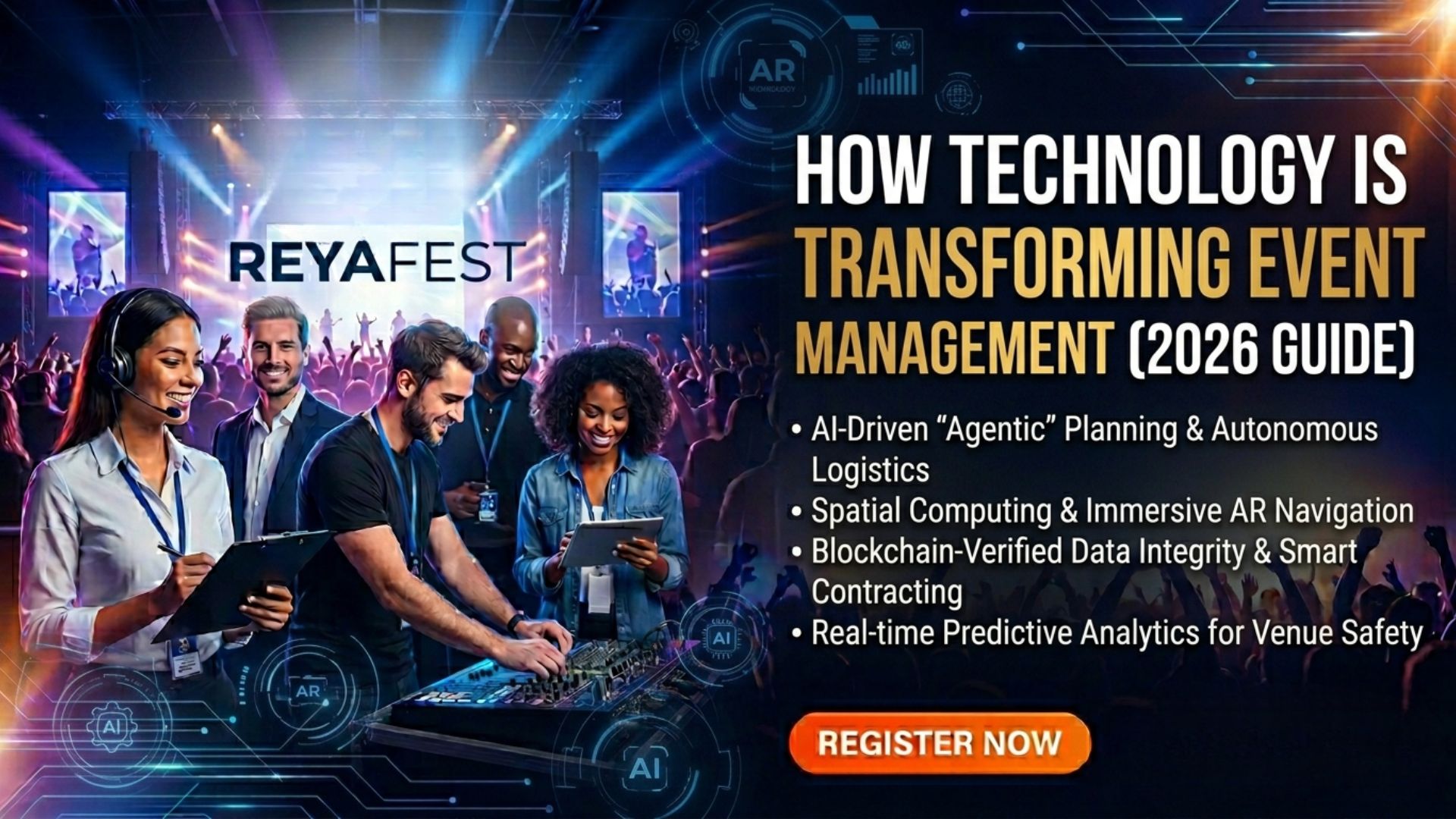
In today’s fast-evolving digital world, technology is reshaping every industry—and event management is no exception. What once required manual coordination, endless phone calls, and spreadsheets has now transformed into a smart, data-driven, and highly efficient process.
From planning and promotion to execution and analysis, technology is making events more engaging, cost-effective, and impactful. At Reyafest, we leverage the latest innovations to deliver seamless and high-performance events across India.
The Shift Towards Tech-Driven Event Management
Modern events are no longer just about logistics—they are about experience, engagement, and measurable results. With the rise of digital tools, event planners can now manage complex events with greater precision and efficiency.
Technology enables:
* Faster planning and execution
* Better audience engagement
* Real-time tracking and analytics
This shift has made event management more professional, scalable, and result-oriented.
Smart Event Planning with Advanced Tools
One of the biggest transformations in the industry is the use of event planning software and automation tools. These tools help streamline the entire process—from initial planning to final execution.
Event managers now use:
* Scheduling and timeline tools
* Budget tracking systems
* Task management platforms
This reduces manual effort, minimizes errors, and ensures smooth coordination between teams. As a result, events are executed faster and more efficiently.
Digital Ticketing and Seamless Entry Systems
Technology has revolutionized how attendees register and enter events. Traditional paper tickets have been replaced by digital ticketing systems and QR code-based entry.
Benefits include:
* Faster check-ins with no long queues
* Real-time attendee tracking
* Improved crowd management
This is especially important for large-scale events like concerts, festivals, and corporate conferences, where managing thousands of attendees can be challenging.
The Rise of Virtual and Hybrid Events
One of the most significant changes in recent years is the growth of virtual and hybrid events. These formats allow organizers to reach audiences beyond physical boundaries.
Virtual and hybrid events offer:
* Global audience reach
* Reduced operational costs
* Flexible participation options
Whether it’s a webinar, online conference, or live-streamed concert, technology makes it possible to connect with audiences worldwide.
Digital Marketing: The Backbone of Event Promotion
Event promotion has shifted from traditional advertising to digital marketing strategies. Today, successful events rely heavily on online visibility and targeted campaigns.
Key digital strategies include:
* Social media promotions
* Influencer collaborations
* Paid advertising campaigns
* Email marketing
These methods help increase event awareness, boost attendance, and ensure better returns on investment.
Advanced Audio-Visual and Production Technology
Technology has significantly enhanced the visual and sensory experience of events. Modern events now use high-end production setups to create immersive environments.
Popular technologies include:
* LED video walls
* Projection mapping
* Intelligent lighting systems
* Special effects
These elements not only enhance the audience experience but also elevate the overall impact of the event.
Artificial Intelligence and Data Analytics
Artificial Intelligence (AI) is becoming a powerful tool in event management. It helps planners make smarter decisions and improve event outcomes.
AI and analytics are used for:
•Understanding audience behavior
•Personalizing attendee experiences
•Predicting event trends
Additionally, data analytics allows organizers to measure success through metrics like engagement, attendance, and ROI.
Mobile Apps for Better Attendee Engagement
Event-specific mobile apps are now widely used to improve communication and engagement.
Features often include:
* Event schedules and updates
* Networking opportunities
* Live polls and feedback
* Notifications and announcements
These apps enhance the attendee experience and keep participants connected throughout the event.
Contactless and Secure Event Experiences
With growing emphasis on safety and efficiency, technology has enabled contactless event solutions.
These include:
* Contactless check-ins
* Digital payments
* Smart access control
Such solutions not only improve safety but also make the event experience smoother and more efficient.
Post-Event Analytics and Performance Tracking
Technology allows event organizers to evaluate the success of an event with detailed insights.
Post-event analysis includes:
* Attendance data
* Audience engagement metrics
* Feedback and reviews
* ROI measurement
This data helps improve future events and ensures better planning and execution.
Conclusion
Technology is no longer just an add-on in event management—it is the foundation of modern event planning. From automation and AI to virtual experiences and digital marketing, technology is transforming how events are created and experienced.
At Reyafest, we combine innovation with expertise to deliver tech-driven, seamless, and impactful events. Whether it’s a corporate event, wedding, or large-scale festival, we ensure every detail is managed with precision and creativity.
2 Comments
Property with mountain and city views boasts nine bedrooms, including a master suite with private terrace and an entertainment wing, which includes a 20-seat theater.Black farmers in the US’s South—faced with continued.
Courselog property with mountain and city views boasts nine bedrooms, including a master suite with private terrace and an entertainment wing, which includes a 20-seat theater. Black farmers in the US’s South—faced with continued.